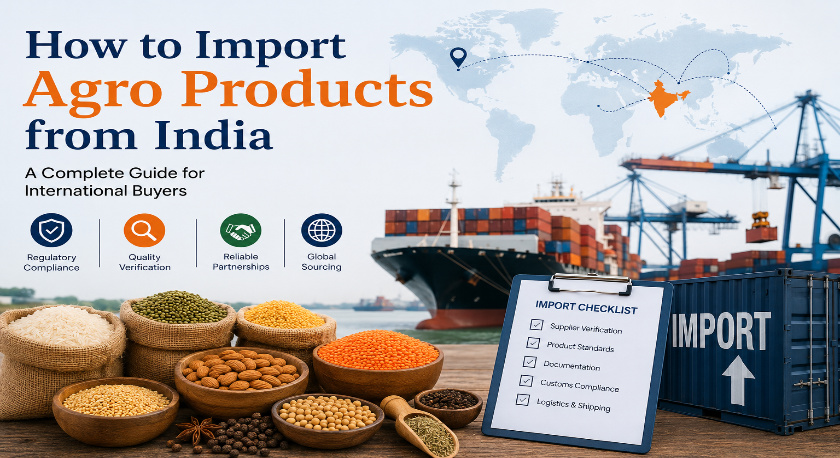
How to Import Agro Products from India: A Complete Guide for International Buyers
Streamlining Global Sourcing: The Strategic Buyer’s Guide to Product Procurement from India
Navigating cross-border trade networks requires precise structural coordination, supply security, and verified regulatory alignment. This professional handbook explores modern mechanisms for risk mitigation, quality verification, and legal governance when managing commercial procurement infrastructures from India.
Critical Sourcing Pillars
- Verify statutory credentials including DGFT IEC filings before capital allocation.
- Incorporate multi-stage, independent quality checks directly within escrow and LC protocols.
- Leverage integrated trade facilitators to balance cross-border operational timelines.
1. Structural Foundations of India’s Export Framework
Procuring goods at an industrial scale demands a clear understanding of the institutional systems governing global trade pipelines. Over the past three decades, India’s regulatory frameworks have evolved into a highly integrated digital ecosystem, significantly lowering barriers to entry for international corporate buyers.
Every legitimate export action is systematically monitored by the Directorate General of Foreign Trade (DGFT). Overseas companies setting up procurement channels must ensure their partner networks possess active Import Export Codes (IEC) and valid registrations with appropriate Export Promotion Councils. For businesses looking to establish verified supply partnerships, starting a formal baseline dialogue through the IIMCL Homepage helps align initial sourcing needs with structured enterprise capacities.
Key Compliance Documentation
Before advancing a procurement order from draft contracts to active cross-border logistics, corporate purchasing groups must cross-verify four foundational legal components:
- Commercial Invoice & Packing List: Must itemize detailed tariff numbers alongside itemized net-gross weights.
- Certificate of Origin (CoO): Essential for triggering preferential customs treatment under active bilateral or multilateral free trade pacts.
- Bill of Lading / Airway Bill: Serves as the binding contract of carriage and definitive document of title.
- Shipping Bill: The official electronic declaration processed via the unified Indian Customs Electronic Gateway (ICEGATE).
Operational Advisory: Document inconsistencies between the Commercial Invoice and the ICEGATE electronic manifest can trigger mandatory port delays, increasing demurrage storage rates by 15% to 45% per day.
2. Compliance Architecture & Quality Verification
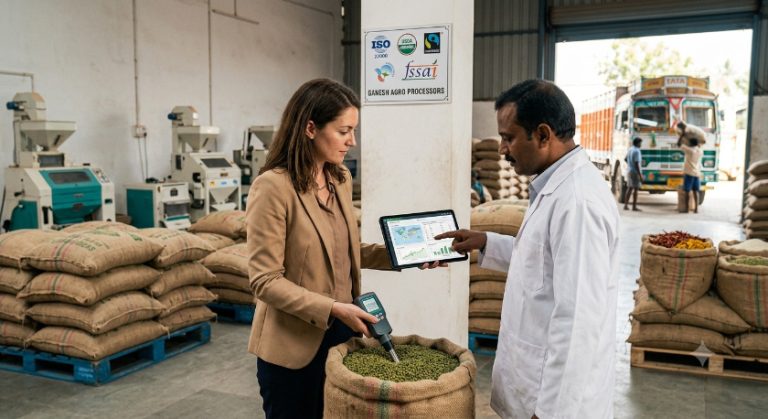
In mid-to-high volume international trade, managing variations in product quality is a primary focus for supply chain risk management. Buyers must replace retrospective corrections with proactive preventative quality measures integrated directly into production timelines.
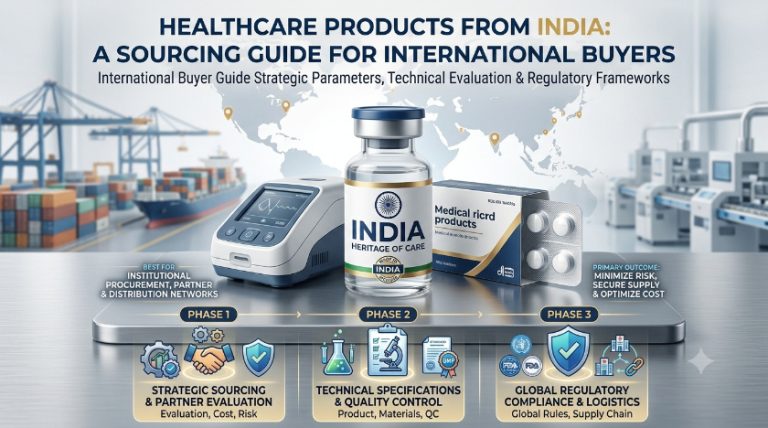
Technical compliance standards depend heavily on the specific product group being sourced. For instance, when sourcing sensitive materials through specialized Healthcare Solutions pipelines, adherence to international standards like ISO 13485 and WHO-GMP specifications is non-negotiable. Similarly, handling large-scale commercial allocations within the Building Materials segment requires structural cross-validation against European CE markings or American ASTM testing metrics.
To systematically eliminate manufacturing variations, global sourcing teams use a standard multi-tier validation sequence during production:
3. Supply Infrastructure & Transnational Logistics
Physical distribution networks require aligning regional production locations with deepwater maritime terminals or specialized air freight hubs. Choosing between different logistics hubs depends heavily on physical shelf-life restrictions, volume limits, and total shipping costs.
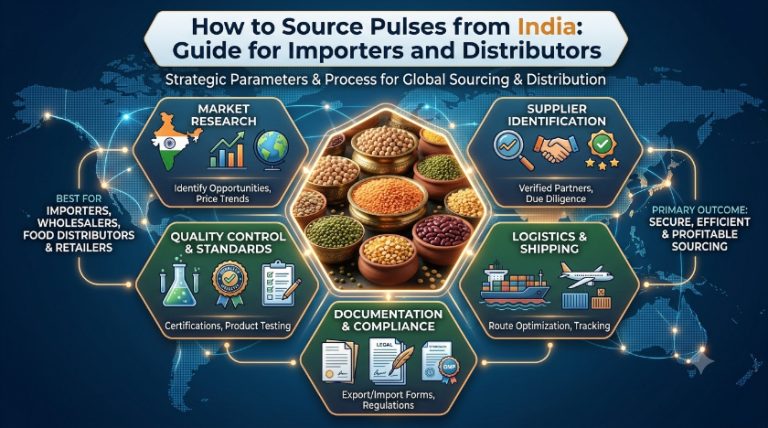
For example, processing bulk orders through the Agro Products division requires using temperature-controlled cold-chain logistics networks, moving quickly toward automated container terminals like Nhava Sheva (JNPT) or Mundra. Conversely, handling advanced commercial deployments within Technology Transformation tracks prioritize high-security, fast-turnaround air-cargo hubs such as Bengaluru (BLR) or New Delhi (DEL) to protect high-value electronic components.
| Product Vertical | Primary Shipping Mode | Critical Infrastructure Requirement | Standard Incoterm Rule |
|---|---|---|---|
| Agro & Consumables | Ocean Freight (FCL) | Active Reefer Monitoring / Humidity Controls | FOB / CIF | Building Materials | Ocean Freight (Breakbulk/FCL) | Heavy-lift Port Facilities / Reinforced Storage | EXW / FOB |
| Technology / Electronics | Air Cargo | ESD Protective Packaging / Anti-theft Hubs | FCA / CPT |
4. Financial Security & Legal Governance Mechanisms
Mitigating financial risk in cross-border trade requires structured payment terms that balance buyer capital security with supplier working capital needs. Relying on unbacked advance wire transfers introduces unnecessary financial risk into multi-month production schedules.
Secure trade structures utilize Irrevocable Letters of Credit (LC) payable at sight, or structured documentary collections validated through designated commercial banking networks. All custom purchasing contracts should explicitly define dispute resolution venues, identify specific governing laws, and define clear penalty parameters for unexcused delays (Force Majeure). International businesses looking to analyze available catalog configurations can review options through the comprehensive IIMCL Shop matrix.
Frequently Asked Sourcing Questions
How are unexpected maritime delays handled under standard FOB terms?
Under Free On Board (FOB) terms, the supplier retains risk and operational responsibility until the freight passes over the ship’s rail at the designated port of shipment. Once loaded, risk and subsequent storage or logistics liabilities transfer entirely to the buyer.
What mechanisms verify product authenticity in specialized chemical or health orders?
Every shipment must include independent Certificates of Analysis (CoA) issued by NABL-accredited or internationally recognized laboratories. These documents confirm specific batch compositions before customs clear the goods for export.
How can a business initiate a consolidated corporate sourcing request?
Organizations can submit detailed procurement schedules, quality specifications, and delivery timelines directly to IIMCL’s trade team through our central portal to receive a structured feasibility analysis.
Optimize Your Procurement Pipeline from India
Connect with India International Marketing Centre Limited (IIMCL) to align your corporate sourcing requirements with verified manufacturing capabilities, structural compliance controls, and secure logistics management.